
Baby Development Guide searches spike at 3 AM when parents panic about their baby’s progress. You know the drill: your friend’s baby started crawling at six months, yours is eight months and still prefers rolling everywhere. Cue the frantic googling and self-doubt spiral.
Here’s what nobody tells you upfront: babies are basically tiny rebels who refuse to follow anyone’s timeline. Your little one might skip crawling entirely and go straight to walking, or they might perfect their sitting game for months before even attempting to move. Both scenarios? Totally normal.
This isn’t another generic Baby Development Guide filled with scary milestone charts. Instead, think of it as your realistic roadmap through the wild, wonderful, sometimes weird world of infant development milestones. We’re talking real talk about what actually happens during those crazy first twelve months.
Every baby writes their own story, and yours is going to be amazing. Let’s figure out what to expect, what to celebrate, and when those 2 AM worries are just your sleep-deprived brain playing tricks on you.
Understanding Baby Development Guide Fundamentals
Forget everything you think you know about normal baby development. There’s no such thing as a “perfect” timeline, and comparison is the thief of parental joy. Your neighbor’s baby might walk at nine months while yours is still perfecting their army crawl at eleven months. Both kids will eventually run marathons if they want to.
Physical development milestones happen in roughly the same order for everyone: head control comes before sitting, sitting happens before standing. But the when? That’s where things get interesting. Some babies are speed demons, others take their sweet time analyzing every movement before committing.
Your baby’s brain is basically a construction site working 24/7. Cognitive development in infants explodes during year one, with neural connections forming faster than you can say “peek-a-boo.” This explains why your baby seems to master five new tricks overnight, then plateau for weeks.
Development comes in waves, not steady streams. Your little scientist might obsess over perfecting their crawling technique while completely ignoring attempts to stand. Then boom – suddenly they’re pulling themselves up like they’ve been doing it forever.
The First Quarter: Baby Development Guide for Months 1-3
Those first three months feel like boot camp for new parents. Your baby arrives with built-in reflexes but needs time to adjust to life outside the cozy womb environment. Everything is bright, loud, and overwhelming compared to their previous digs.
First month baby milestones are pretty basic: eat, sleep, poop, repeat. Your newborn recognizes your voice from their womb days and might turn toward familiar sounds. Don’t stress if they sleep 16 hours a day – their brain is growing like crazy and needs all that rest time.
Month two brings the holy grail of parenting: real smiles. Two-month development markers include that first genuine grin around 6-8 weeks, plus improved eye tracking and adorable cooing sounds. These little vocalizations are your baby’s first attempts at conversation.
Month 3: A Baby Development Guide Milestone Celebration
Three months feels like graduation day. Three-month baby skills include much better head control, longer awake periods, and genuine social interaction. Your baby starts recognizing faces and might get excited when you walk into the room.
Tummy time benefits become obvious now as those neck muscles strengthen. If your baby still hates tummy time, try lying them on your chest instead. Sometimes a change of scenery (and your familiar heartbeat) makes all the difference.
Month three often marks the end of that fourth-trimester haze. Your baby becomes more predictable, alert, and frankly, more fun to hang out with. You might even manage to drink coffee while it’s still warm!
The Second Quarter: Baby Development Guide for Months 4-6
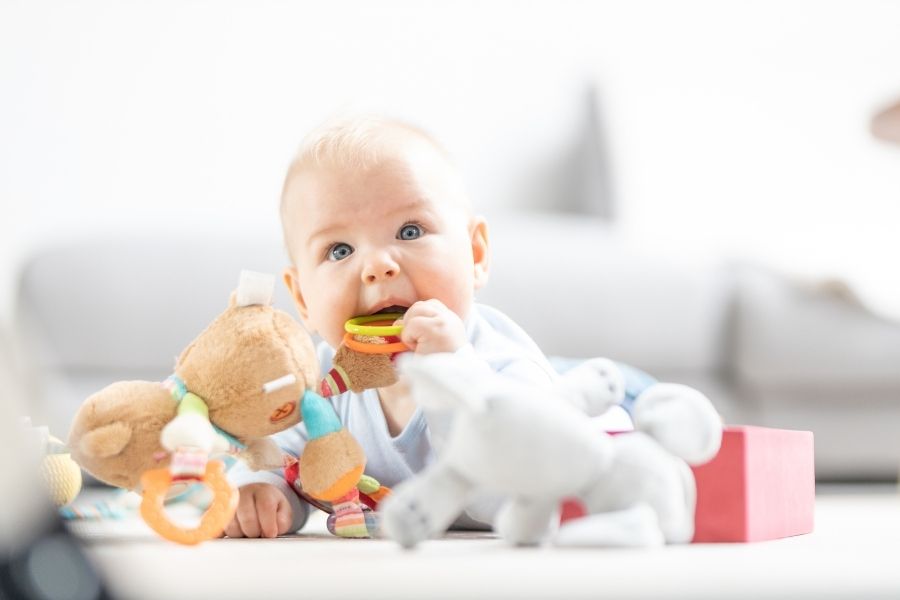
Things get real during months four through six. Four-month developmental leaps bring rolling (usually tummy to back first), better grabbing skills, and the delightful discovery of hands and feet. Everything goes straight to the mouth because that’s how babies investigate their world.
Hand-eye coordination milestones improve dramatically. Your baby reaches for toys with growing accuracy and spends ages examining objects from every angle. That concentration face while studying a rattle? Pure scientific research in action.
Sleep might improve during this stretch, though every baby writes their own sleep story. Some parents celebrate longer nighttime stretches while others wonder why their previously good sleeper suddenly wakes up more often. Growth spurts and brain development can mess with sleep patterns.
Month 5: Social Butterfly Emergence in Your Baby Development Guide
Five-month baby progress centers around becoming a tiny social creature. Expect belly laughs, babbling conversations, and clear preferences for familiar faces. Your baby’s personality starts shining through their expressions and reactions.
Infant babbling development hits its stride with adorable “ba-ba-ba” and “da-da-da” experiments. This isn’t random noise – your baby is learning to control their voice box and tongue for future talking. Those babbling sessions are basically vocal practice rounds.
Many babies show interest in sitting around this time, though they’ll need support for weeks longer. You might catch them doing mini push-ups during tummy time, building those core muscles they’ll need for independent sitting.
Month 6: Half-Birthday Baby Development Guide Celebrations
Six months deserves a party! Six-month motor skills often include rolling both ways, sitting with support, and showing interest in solid foods. This is prime time for baby food introduction timing, following your doctor’s recommendations.
Sitting milestone development becomes the main event. Your baby might sit alone for brief moments before toppling over sideways. Create a soft landing zone with pillows because tumbles are part of the learning process.
Communication explodes during month six. Your baby might recognize their name, show curiosity about the word “no,” and develop different cries for different needs. You’re becoming fluent in baby speak without realizing it.
The Third Quarter: Baby Development Guide for Months 7-9
Months seven through nine bring mobility mayhem as your baby gears up for their first birthday. Seven-month development stages include confident sitting, object transferring between hands, and stranger anxiety (which is actually a good sign of healthy attachment).
Crawling readiness signs vary wildly between babies. Traditional crawling, bottom scooting, rolling everywhere, or skipping straight to pulling up – all valid approaches to getting around. Each method builds strength and coordination for eventual walking.
Baby-proofing becomes essential as curious hands explore everything within reach. Your formerly stationary baby suddenly has access to electrical outlets, pet food, and that dust bunny under the couch you forgot about.
Month 8: Advanced Baby Development Guide Motor Skills
Eight-month physical milestones frequently include some form of independent movement, pulling to stand while holding furniture, and improved pincer grasp for grabbing small objects. Your baby’s hand-eye coordination gets impressively precise.
Object permanence understanding emerges, making peek-a-boo even more thrilling while potentially complicating bedtime routines. Your baby now knows you exist even when they can’t see you, which can trigger separation anxiety phases.
Early language development accelerates as your baby starts understanding simple words like “up” and “more,” even if they can’t say them yet. Constant chatter, reading, and singing provide rich language exposure.
Month 9: Baby Development Guide Independence Growing
Nine-month baby achievements revolve around problem-solving and independence. Your little engineer might figure out cabinet opening, stair climbing, or toy retrieval from under furniture. Their determination can be both impressive and exhausting.
Separation anxiety phases often peak around nine months. Your previously social butterfly might suddenly cling to you and cry when grandma tries to hold them. This behavior shows healthy attachment development and usually passes quickly.
Fine motor skill progression becomes evident as your baby masters the pincer grasp, precisely picking up small food pieces and tiny toys with thumb and forefinger coordination.
The Final Quarter: Baby Development Guide for Months 10-12
The home stretch brings exciting developments as your baby prepares for toddlerhood. Ten-month developmental markers often include furniture cruising, possible first words, and strong preferences for specific toys, foods, and activities.
First words emergence typically happens between 10-14 months, though timing varies enormously. Don’t panic if your mobile eleven-month-old hasn’t said “mama” yet – they might be too focused on perfecting their climbing skills.
Cruising and pre-walking skills develop as your baby gains confidence moving while gripping furniture. They’ll practice squatting, standing, and tentative steps while maintaining their safety grip on stable surfaces.
Month 11: Baby Development Guide Final Preparations
Eleven-month skill building focuses on walking preparation and communication expansion. Your baby might take a few wobbly independent steps, follow simple instructions, and show affection through spontaneous hugs and kisses.
Independent play development becomes more sophisticated as attention spans grow. Your baby might focus on a single toy for 10-15 minutes, exploring possibilities and developing problem-solving strategies.
This month often brings increased opinions and preferences. Head shaking “no” at unwanted foods or pushing away boring toys shows your baby’s developing sense of autonomy and personal taste.
Month 12: First Birthday Baby Development Guide Celebration
Twelve-month milestone achievements mark an incredible transformation year. Your baby likely tripled their birth weight, grew significantly taller, and evolved from helpless newborn into curious, mobile, communicating little person.
First birthday developmental assessment typically includes independent walking or readiness signs, consistent use of 1-3 words, and understanding simple commands. Remember, normal development spans a wide range – early and late bloomers both catch up eventually.
Social-emotional development reaches new heights as your one-year-old shows empathy, engages in pretend play, and demonstrates clear caregiver attachment. They’re becoming a unique individual with distinct personality traits and preferences.
When to Seek Professional Guidance in Your Baby Development Guide Journey
This Baby Development Guide offers general timelines, but every baby marches to their own drummer. However, certain developmental red flags deserve professional attention. Trust your gut instincts – you know your baby better than anyone else.
Early intervention benefits are well-established when delays are caught and addressed quickly. Most concerns resolve naturally with time and support, but professional guidance provides peace of mind and helpful strategies.
Consider pediatrician consultation if your baby misses multiple milestones within expected timeframes, loses previously mastered skills, or if persistent concerns keep you awake at night beyond normal new parent worry levels.
Supporting Your Baby’s Development: Practical Tips
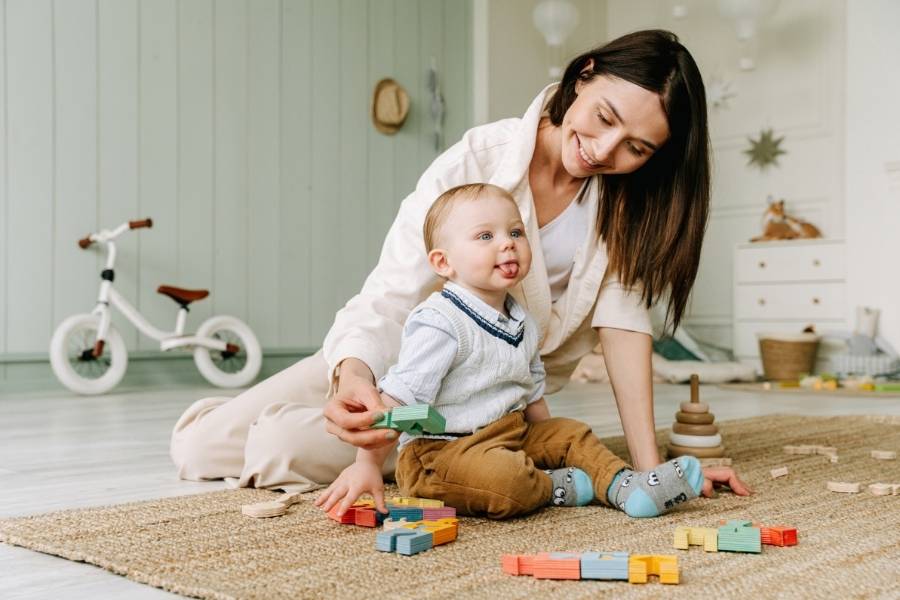
Developmental activities for babies don’t require fancy toys or Pinterest-worthy setups. Reading, singing, and chatting during daily routines provide rich learning opportunities. Your face, voice, and attention remain your baby’s favorite entertainment system.
Play-based learning approaches happen naturally through everyday interactions. Peek-a-boo teaches object permanence, pat-a-cake develops coordination, and silly songs support language development. Follow your baby’s interests and energy levels rather than forcing structured activities.
Watch for overstimulation signs like fussiness, looking away, or increasing agitation. Babies need processing time for new experiences and information. Sometimes the best developmental support involves quiet snuggling while your baby observes their surroundings peacefully.
Your baby’s first year represents an incredible journey of discovery, growth, and bonding. Milestones provide helpful reference points, but remember your baby follows their own unique developmental blueprint. Some days feel like major breakthroughs, others like you’re moving backward – both experiences are completely normal.
The most important gift you can offer isn’t perfect milestone timing, but rather a loving, responsive environment where your baby feels safe to explore, learn, and grow at their own pace. Trust your instincts, savor these fleeting moments, and remember that worrying about development actually proves you’re doing great as a parent.
In just twelve months, your tiny newborn transforms into a walking, talking, personality-packed little human being. If that’s not worth celebrating, what is?