
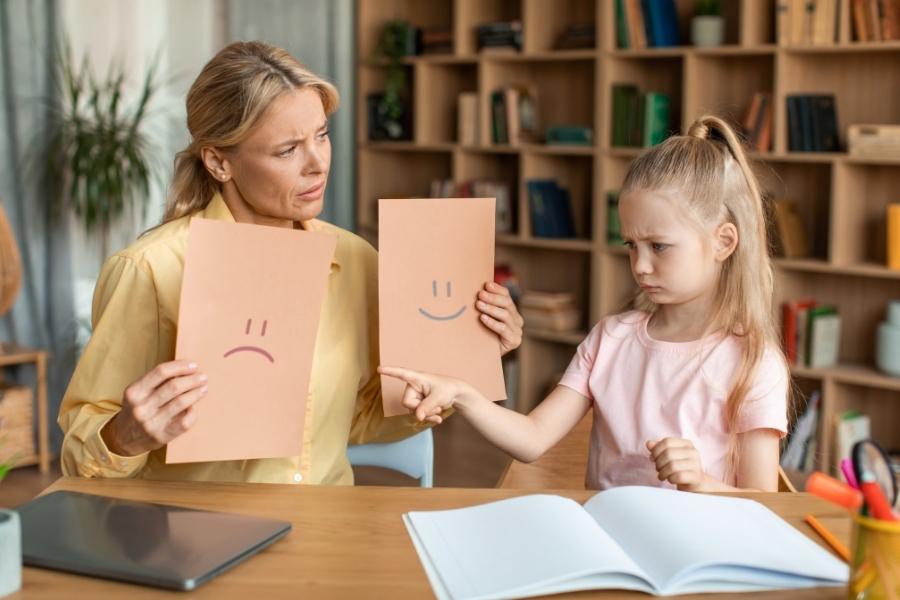
Emotional Intelligence in Children makes all the difference when your kid faces a tough day. You know that moment when your five-year-old’s block tower crashes down? Some kids throw those blocks everywhere and scream. Others take a breath, look bummed for a second, then grab more blocks to try again. What’s going on there? It’s emotional smarts, and you can totally help your child build this superpower.
Think about it like this: emotional intelligence is your kid’s GPS for feelings. It helps them figure out friendships, bounce back when things go wrong, and handle all the crazy stuff life throws at them. Kids who get good at this don’t just do better with friends. They actually do better in school and feel happier overall.
Here’s the cool part: you don’t need fancy classes or expensive programs. This stuff happens during regular family moments. When your kid spills chocolate milk on their math homework. And when they’re nervous about the substitute teacher. When they’re buzzing with excitement about their bestie’s sleepover. These everyday situations? They’re goldmines for building emotional skills.
Why Emotional Intelligence in Children Actually Changes Everything
Your kids are growing up in a wild time. Social media everywhere, crazy school pressure, everything changing super fast. Emotional intelligence skills aren’t just nice to have anymore. They’re absolutely essential for kids to thrive instead of just survive.
Picture this: your child gets swamped with homework and starts freaking out. A kid with solid emotional skills might recognize that overwhelmed feeling, ask for help, take a break, or chunk the work into smaller pieces. That’s not just about managing feelings. That’s smart problem-solving that’ll help them their whole life.
The ripple effect goes way beyond childhood too. Adults who rock at emotional intelligence usually have better jobs, stronger relationships, and just feel more satisfied with life. So when you work on this stuff now, you’re basically giving your kid tools that keep getting more valuable over time.
But here’s what gets me excited: every emotionally smart kid you raise becomes an adult who can handle conflict better, show real empathy, and make positive changes happen. You’re not just helping your own kid. You’re helping create a generation that’s actually equipped to deal with hard stuff.

The Building Blocks That Make Emotional Intelligence in Children Work
Emotional Intelligence in Children sits on four main pieces, kind of like the legs holding up your kitchen table. Take away one leg and everything gets wobbly. First up is self-awareness, which just means your kid can figure out what they’re feeling when it happens.
Self-awareness starts with a simple question: “What’s going on inside me right now?” Sounds easy, right? But for little kids still learning words, this can be tricky. Your child might feel butterflies before their piano thing, but they can’t tell if that’s scared or excited. Your job? Help them connect those body feelings with feeling words.
The third piece is social awareness. Your kid starts noticing and understanding other people’s feelings. This moves them from being completely focused on themselves to actually seeing the emotional world around them. When your child notices their friend looks bummed and asks what’s wrong, they’re showing social awareness in action.
Last is relationship management, which pulls everything together. Your kid uses all their emotional understanding to build good relationships, work through fights, and communicate well. It’s what separates kids who can work through playground drama from those who either give up or make things worse.
Daily Strategies That Actually Build Emotional Intelligence in Children
Here’s the beautiful thing about growing emotional intelligence in children: it fits right into your regular day. No special equipment needed. No scheduled emotion lessons. Just think of yourself as your kid’s emotion coach, ready to help when feelings show up naturally.
Emotion naming becomes your secret weapon. When your child’s having big feelings, help them put words to it. Skip saying “Don’t be upset.” Try “You look really frustrated because your crayon snapped. That’s annoying when you’re making something cool.” You’re validating what they feel while building their feelings vocabulary.
Make feelings check-ins part of your routine. Car rides, dinner time, bedtime stories – ask open questions about emotions. “What was awesome about today? What sucked? How’d that make you feel?” Regular emotion talk makes it normal and gives you inside info about your kid’s world.
Showing emotional intelligence yourself might be your most powerful move. Kids watch everything, and they learn way more from watching you handle feelings than from any lecture. When work stress hits, you might say out loud, “Man, I’m feeling swamped by everything I need to do. Think I’ll take some deep breaths and make a list.” You’re demonstrating emotional awareness and healthy coping skills without even trying to teach.
Reading People: Teaching Emotional Intelligence in Children Through Body Language
Your kid’s body spills the tea before their mouth ever opens, and learning to read these signals is huge for developing emotional intelligence in children. Think about how much you can figure out just by looking: arms crossed usually means defensive, bouncing legs often mean excited or nervous, and avoiding eye contact frequently means embarrassed or ashamed.
Help your kids become body language detectives with their own reactions first. When your child’s upset, guide them to notice what’s happening physically. “Where do you feel that anger? Is your jaw all tight? Are your hands making fists? How’s your breathing?” This body awareness creates a bridge between what’s happening inside and their ability to recognize and handle emotions.
Practice emotion spotting through photo books, family pictures, or people-watching at the mall. Make it fun: “I spy someone who looks worried. Can you find them too?” This builds their ability to recognize emotional signals in real life, which directly translates into better social skills and empathy.
Handling Big Feelings: Emotional Intelligence in Children When Things Get Intense
When massive emotions hit, your kid’s still-growing brain feels like a tornado with all the chaos that brings. The trick to building emotional intelligence in children during these moments isn’t stopping the tornado immediately. It’s teaching them how to stay safe while it passes through.
Kid-friendly breathing techniques can be their anchor when emotions get stormy. Try “flower breath”: smell a flower slowly and deeply, then blow the petals away gently. Or “balloon breaths” where they puff up their belly like a balloon, then slowly let the air out. These work because they actually calm down the body’s stress system.
Build a calm-down kit together when everyone’s chill. Maybe a soft blanket for comfort, a squishy ball for getting energy out, a favorite book for distraction, or calming music. Having go-to strategies ready makes it easier for kids to pick healthy ways to cope when they’re losing it.
Remember that building emotional smarts happens after things calm down, not during the emotional hurricane. Once your child’s settled, that’s when you can explore what happened, what they learned, and what they might try differently next time. These curious conversations, held without judgment, become the building blocks of emotional wisdom.
Building Empathy and Emotional Intelligence in Children Through Real Life
Empathy grows stronger the more you use it, and regular life gives you endless chances for emotional intelligence in children to grow through empathetic practice. The grocery store becomes a classroom when you notice the tired cashier and whisper, “Wonder if she’s had a rough day. What could we do to make her smile?” These tiny moments teach kids to look beyond themselves.
Storytelling becomes an empathy superpower. When you’re reading together, pause to dig into characters’ feelings and choices. “Why do you think she did that? How would you feel in her shoes? What would you have done?” These chats help kids practice seeing things from different angles in a safe, imaginary space.
Get your child to become an emotion detective in daily life. During family gatherings, quietly ask, “How do you think Uncle Mike’s feeling today? What makes you think that?” This builds their ability to notice and interpret emotional signals, which sets them up for empathetic responses.
Community helper projects designed for kids give real-world empathy practice. Making cards for nursing home folks, collecting stuff for animal shelters, or helping a neighbor with yard work – these activities help kids understand that what they do can actually impact how others feel.
Create chances for peer emotional support in your family or friend groups. When one kid’s struggling, guide others in offering the right kind of comfort. This might look like teaching a sibling to give hugs, suggest fun activities, or just sit quietly with someone who’s sad.
The goal isn’t raising kids who soak up everyone else’s emotions like sponges. You want kids who can recognize and respond to others’ feelings appropriately while keeping their own emotional boundaries intact. This balance between caring and self-protection becomes a crucial life skill for all relationships.
Emotional Intelligence in Children: What Works for Different Ages
Just like you wouldn’t expect your two-year-old to tie shoes like your eight-year-old, emotional intelligence in children develops differently at various stages. Understanding these differences helps you adjust your approach and set realistic expectations for your child’s emotional growth.
Little ones (ages 2-5) are just starting to understand they have feelings on the inside. Their strategies need to be simple, concrete, and often physical. Color-coding emotions works great – red for angry, blue for sad, yellow for happy. You might make an emotion wheel with simple faces, or use stuffed animals for different feelings. Building emotional vocabulary happens through repetition and simple words: “You’re mad. Mad, mad, mad. Being mad is okay.”
Elementary kids (ages 6-10) can handle trickier emotional concepts while still needing concrete tools. They can start understanding that emotions have different strengths – feeling annoyed versus totally furious, or disappointed versus crushed. Problem-solving abilities become bigger as they can start thinking through cause and effect in emotional situations.
Tweens and teens (ages 11+) deal with hormones, social drama, and identity stuff, making their emotional world particularly intense. They need strategies that respect their growing independence while providing guidance for increasingly complex emotional situations. Stress management methods become crucial as school and social pressures ramp up.
Creating Emotionally Safe Spaces: Emotional Intelligence in Children at Home
Your home environment plays a huge role in developing emotional intelligence in children, serving as their main laboratory for learning about feelings, relationships, and emotional expression. Think of your home as an emotional greenhouse – a place where feelings can be safely experienced, explored, and understood without judgment or shame.
Making emotional safety happen starts with how you respond to your child’s emotions. When your child expresses difficult feelings, you might want to fix, minimize, or redirect. Instead, try pausing and receiving their emotions with curiosity and acceptance. This doesn’t mean allowing inappropriate behavior, but it does mean creating space for all feelings to exist and be acknowledged.
Develop family emotion rules together. These might include stuff like “All feelings are okay, but not all actions are okay,” or “We listen when someone shares feelings,” or “We don’t judge or try to fix each other’s emotions unless asked for help.” Having clear expectations helps everyone feel safer when sharing vulnerable feelings.
Physical space matters too. Consider creating a calm corner or comfort zone where kids can go when they need emotional regulation time. This isn’t a punishment space, but rather a self-care area with comfort items, sensory tools, and maybe some visual reminders of coping strategies.
The Long-Term Payoff: Emotional Intelligence in Children as Life Prep
When you invest in developing emotional intelligence in children, you’re not just helping them handle kid problems – you’re giving them skills that’ll shape their entire life path. Think about the teenager who recognizes peer pressure and makes decisions that match their values, or the young adult who maintains healthy relationships because they understand both their own needs and others’ perspectives.
School benefits go way beyond what you’d expect. Kids with strong emotional intelligence usually focus better, have more effective study habits, and build stronger relationships with teachers and classmates. They’re more likely to ask for help when needed, push through challenges, and work well with others on group projects. These skills translate directly into better grades and greater success in learning environments.
The career advantages of emotional intelligence are well-documented and keep growing in importance. In a world where robots handle more tasks, the uniquely human skills of empathy, emotional regulation, and people skills become more valuable. Kids who develop these skills early will be better positioned for leadership roles, team-based careers, and adapting to changing work environments.
Relationship benefits might be the most significant long-term impact. Adults with high emotional intelligence tend to have more satisfying marriages, stronger friendships, and healthier family relationships. They’re better at working through conflicts, more skilled at emotional intimacy, and more resilient when relationships face challenges.
Emotional Intelligence in Children: Moving Forward on Your Journey
Building emotional intelligence in children isn’t a finish line you cross. It’s more like a road trip you take together. Some days will feel like major breakthroughs when your kid handles a tough situation with incredible maturity. Other days might feel like you’re back at square one when they have a complete meltdown over something seemingly tiny. Both experiences are normal, valuable parts of the learning process.
You don’t need to be perfect to guide your child’s emotional development well. Actually, your own struggles with emotions, handled openly and honestly, become powerful teaching moments. When you mess up how you handle feelings, own it, make things right if needed, and talk about what you learned. This models the growth mindset that emotional intelligence requires.
Start small and build slowly. You don’t need to use every strategy at once. Pick one or two approaches that feel right for your family’s style and your child’s personality, then add new stuff as these become natural parts of your routine. Emotional intelligence growth happens through consistent, small interactions over time, not through big gestures or intensive programs.
Trust your gut and your child’s natural ability to grow. Kids are naturally curious about emotions and relationships. Your job isn’t to force emotional intelligence, but to create opportunities, provide guidance, and trust the process. Every child develops at their own pace, and comparing with others just creates unnecessary pressure.