
Postpartum hair changes hit differently when you’re already juggling a newborn and running on three hours of sleep. One day you’re admiring your thick pregnancy hair, the next you’re pulling clumps from the shower drain wondering if you’ll go bald before your kid learns to walk.
You’re not losing your mind, and you’re definitely not alone. Your hair is just throwing its own little tantrum after nine months of behaving perfectly. While everyone’s cooing over your beautiful baby, you’re secretly mourning the loss of what felt like the best hair of your life.
Nearly 90% of new moms deal with this exact situation. The good news? It’s temporary, and there are real ways to help your hair bounce back faster. You don’t need to hide under hats for the next year or convince yourself that messy buns are your new permanent style.
Let’s dig into what’s actually happening up there and what you can do about it. Because feeling good about yourself shouldn’t be another thing you have to sacrifice for motherhood.
Why Your Hair Decided to Stage a Mass Exodus
Here’s what nobody tells you about postpartum hair shedding: during pregnancy, your hair basically got a free pass to skip its normal shedding cycle. All those hairs that should have fallen out over nine months just stuck around, making your hair look incredible.
Picture this: your hair follicles were hosting the world’s longest sleepover. Everyone stayed, nobody left, and your hair looked like something straight out of a shampoo commercial. But sleepovers have to end eventually.
Once you deliver, your hormones crash harder than a toddler past naptime. All those hairs that were supposed to leave months ago suddenly get the memo at once. This usually kicks in around three months postpartum, which is why it catches so many women off guard.
Doctors call it telogen effluvium, but honestly, who cares what it’s called when you’re watching your hairline retreat? Your body is basically hitting the reset button, trying to get back to normal after the beautiful chaos of pregnancy.
Most women lose anywhere from a quarter to more than half their hair volume. Before you panic, remember that your hair was artificially thick during pregnancy. What feels like massive loss is often just your hair returning to its pre-pregnancy state, plus a little extra drama for good measure.
The Real Timeline Nobody Warns You About
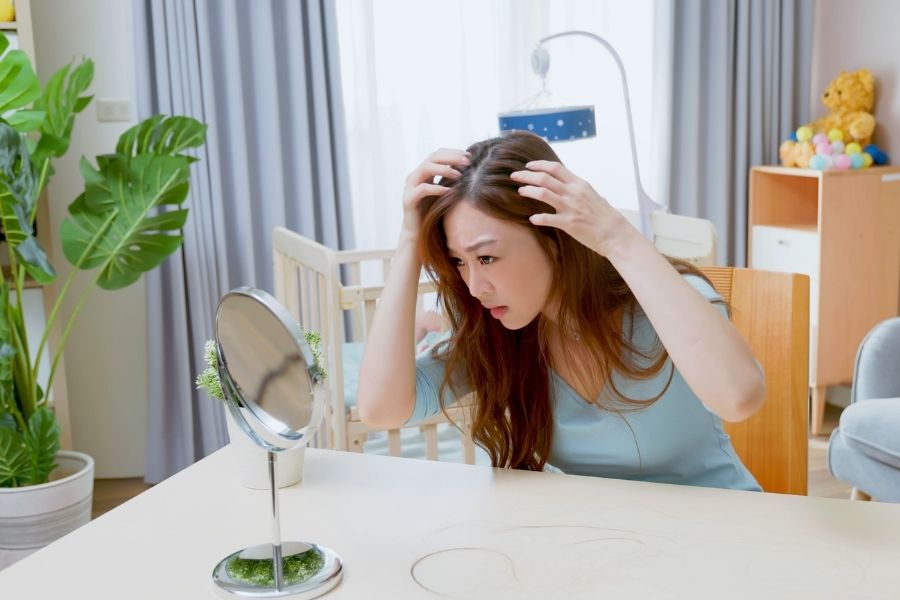
The postpartum hair loss timeline plays out like a really slow horror movie. It starts innocently enough around two to three months postpartum. You might notice a few extra hairs on your pillow or wrapped around your baby’s tiny fingers.
Then comes the main event, usually between months three and six. This is when excessive hair shedding after pregnancy goes into overdrive. You’ll clean out your hairbrush and wonder how you have any hair left. Some mornings, you’ll look in the mirror and swear you lost half your hair overnight.
Things start calming down between six and nine months postpartum. The daily hair loss becomes less shocking, though you’ll still find strands everywhere. Seriously, how does hair end up in the weirdest places?
The comeback tour usually begins around nine to twelve months. You’ll start seeing tiny baby hairs poking up around your hairline. They look ridiculous at first, like you stuck your finger in an electrical socket, but they’re actually your hair’s way of saying “I’m back.”
Full recovery takes twelve to eighteen months, sometimes longer if you’re breastfeeding. Breastfeeding and hair loss are connected because nursing keeps certain hormone levels elevated, which can slow down the recovery process.
Feeding Your Hair Back to Health
Your hair follicles are basically tiny food critics, and they’re not impressed with the nutritional leftovers they’ve been getting. When you’re surviving on crackers eaten standing over the sink while bouncing a crying baby, your hair gets whatever’s left after everything else.
Iron deficiency and postpartum hair loss team up more often than you’d think. Pregnancy and delivery can wipe out your iron stores, and without enough iron, your hair follicles basically go on strike. It’s like trying to power a car with an empty gas tank.
Get your iron levels checked before you start popping supplements. If you’re low, iron can make a huge difference in your hair regrowth after pregnancy. But don’t play guessing games with this stuff – too much iron can cause its own problems.
Protein deserves a starring role in your hair recovery plan. Your hair is literally made of protein, so if you’re not eating enough, your body will redirect protein to more important things than making your hair look good. Try to get some quality protein at every meal, even if it’s just Greek yogurt or a handful of nuts.
Biotin for postpartum hair loss gets a lot of hype, and while it’s not magic, it can help if you’re actually deficient. Most people get plenty from food, but if you want to try supplements, stick to normal doses. Too much biotin can mess with lab tests, which is the last thing you need.
Don’t forget about omega-3s either. These healthy fats keep your scalp happy and might help reduce inflammation that interferes with hair growth. Fish, walnuts, and flaxseeds are your friends here.
Treating Your Hair Like the Delicate Thing It Currently Is
When your postpartum hair is already hanging on by a thread (literally), rough handling can make things worse. Think of your hair as being as fragile as your sleep schedule right now – it needs gentle treatment.
You might think washing less will save your hair, but a clean scalp actually helps with regrowth. Wash every two to three days with something gentle and sulfate-free. Your hair doesn’t need harsh detergents on top of everything else it’s dealing with.
Keep the water lukewarm, not hot. Hot water is harsh and drying, which your hair doesn’t need right now. Focus the shampoo on your scalp where the oil builds up, not on the lengths of your hair.
Scalp massage for hair growth feels good and might actually help. Gentle circles with your fingertips can boost blood flow to your hair follicles. Do it while shampooing or watching TV – whatever works with your schedule.
Drying requires serious patience. Pat your hair with a soft towel instead of rubbing it like you’re trying to start a fire. Let it air dry as much as possible before reaching for the blow dryer. When you do use heat, always use a protectant product first.
Switch to silk or satin pillowcases if you can. They create less friction while you sleep, which means less breakage and fewer tangles to deal with in the morning. It’s a small change that adds up over time.
When DIY Isn’t Cutting It Anymore
Sometimes your best efforts at home aren’t enough for your postpartum hair thinning. There’s no shame in calling in the professionals when you need backup.
Topical minoxidil is usually the first thing dermatologists suggest. It was originally a blood pressure medication until researchers noticed it made hair grow as a side effect. The over-the-counter version for women can help wake up sleepy hair follicles.
If you’re breastfeeding, check with your doctor first. While absorption through the scalp is minimal, it’s better to be safe when you’re nursing.
Low-level laser therapy sounds fancy but it’s basically special light treatments that might stimulate your hair follicles. You can get these done professionally or buy devices for home use. The jury’s still out on how well they work, but some women swear by them.
Professional scalp treatments can give you a boost too. These might include microneedling (tiny needles that encourage healing) or PRP treatments (using your own blood components to stimulate growth). It sounds more intense than it usually is.
For persistent cases, doctors might prescribe medications like spironolactone, which blocks hormones that contribute to hair loss. These require monitoring, so you’ll need regular check-ins with your doctor.
Smart Styling When You’re Working With Less
How you style your postpartum hair can make or break how it looks and how much more you lose. Smart styling isn’t about hiding – it’s about making the most of what you’ve got while protecting what’s left.
Tight hairstyles are the enemy right now. Ponytails, braids, and buns that pull on your hairline can cause even more loss. If you need your hair out of your face (and honestly, who doesn’t with a baby around?), use gentle ties and move them around.
Volumizing products for thin hair can be lifesavers. Look for lightweight mousses or root sprays that add body without making your hair feel heavy or sticky. Focus on roots and mid-lengths, not the ends.
Consider a strategic haircut. Shorter styles often look fuller and are way easier to manage when you’re dealing with patchy regrowth. A good stylist can work magic with layers that disguise thin spots.
When you do use heat tools, make them count. Use volumizing mousse first, then lift sections straight up while blow-drying to create lift at the roots. Round brushes help create the illusion of more volume.
Hair accessories become your best friends. Headbands hide sparse hairlines, scarves add style on bad hair days, and strategic clips can cover thin spots. Work smarter, not harder.
The Hormone Chaos Behind It All
The hormonal changes and hair loss connection is real and complicated. Your hormones are basically throwing a temper tantrum after pregnancy, and your hair is caught in the crossfire.
Estrogen and progesterone were like personal trainers for your hair during pregnancy, keeping follicles in growth mode longer than usual. After delivery, these hormones disappear faster than your pre-baby energy levels.
If you’re breastfeeding, prolactin sticks around to help with milk production, but it can extend your hair loss phase. This is why breastfeeding mothers and hair loss often go together, and why nursing moms might wait longer to see improvement.
Your thyroid can also go haywire after having a baby. Both overactive and underactive thyroid conditions cause hair loss, and postpartum thyroiditis affects about 1 in 10 new mothers. If your hair loss seems extreme, get your thyroid checked.
Stress hormones like cortisol often stay elevated when you’re dealing with sleep deprivation and new parent stress. Chronic stress can push hair follicles into early retirement, making the problem worse.
The good news? Hormone levels usually stabilize within the first year postpartum. Your hair should improve as everything settles into a new normal.
Red Flags That Need Professional Attention
While postpartum hair loss usually resolves on its own, sometimes you need professional help. Knowing when to seek help can save you months of unnecessary worry.
If you’re still losing significant amounts of hair after your baby’s first birthday, it’s time to see a doctor. Some variation in recovery time is normal, but ongoing major shedding past twelve months might indicate something else is going on.
Patchy hair loss or actual bald spots should always get checked out. Normal postpartum shedding affects your whole scalp evenly, not in patches. Distinct bald areas might be something like alopecia areata, which needs different treatment.
If your scalp itches, burns, or feels inflamed along with the hair loss, that’s not normal. Regular postpartum shedding doesn’t hurt – the hair just falls out without drama.
Other symptoms alongside excessive hair loss after pregnancy like extreme fatigue, unexplained weight changes, or irregular periods could signal thyroid issues or other hormonal imbalances that need medical attention.
Don’t tough it out if the hair loss is seriously affecting your mental health. The postpartum period is emotionally challenging enough without adding hair loss stress to the mix. Your wellbeing matters, and there’s help available.
Staying Confident While Your Hair Figures Itself Out
The emotional side of postpartum hair loss gets overlooked way too often. Your hair is part of who you are, and watching it change dramatically while everything else in your life is also changing can feel overwhelming.
Try thinking about this differently. Instead of “losing” your hair, you’re watching your body reset after doing something incredible. Your hair is just one more thing adjusting to your new reality.
Self-care for new mothers doesn’t have to be complicated or time-consuming. Use shampoo that smells good, take an extra minute to massage your scalp, or try a new hair clip. Small things can make a bigger difference than you’d expect.
Talk to other moms about this. Online groups, local meetups, or even casual conversations with friends can be reassuring. Sometimes just knowing other women have been through this and come out with healthy hair on the other side helps enormously.
Maybe this is a chance to try something new. You might discover you love shorter hair, or find a new styling trick that becomes your signature look. Sometimes change leads to something even better.
Remember that recovery isn’t always smooth. Some days your hair will look great, others not so much. Focus on the overall progress rather than daily ups and downs.
Your worth isn’t measured by your hair thickness. You’re already doing something amazing by taking care of your child. Your hair will recover, but your strength is already showing every single day.
Going through postpartum hair loss can feel isolating and frustrating, but remember that this phase will pass. Your hair has incredible recovery powers, and with patience, gentle care, and professional help when needed, you’ll likely see major improvement within your baby’s first year. Trust that your body knows how to heal itself, be patient with the process, and remember that the best growth sometimes happens when you can’t see it yet.