
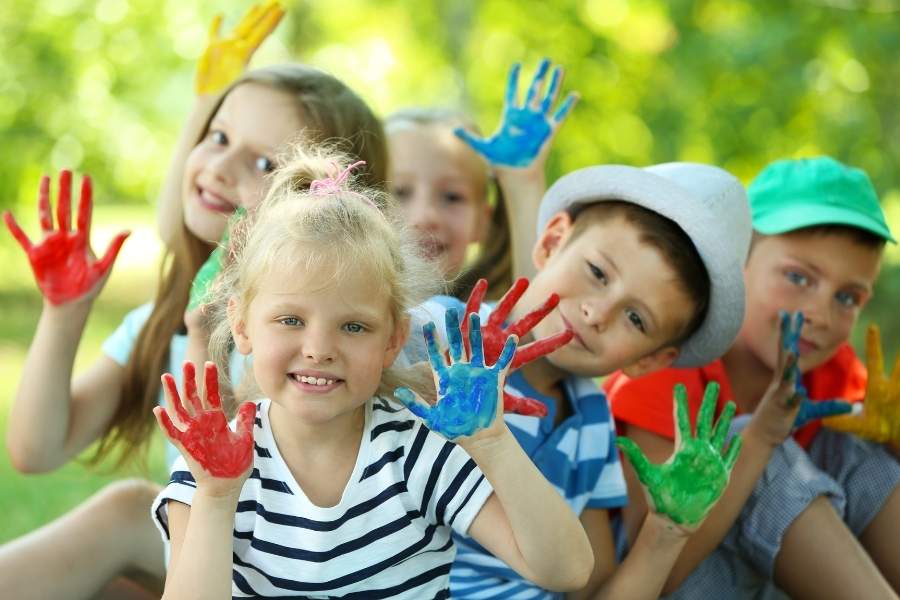
Creative activities are a parent’s secret weapon when the kids are bouncing off the walls. You know that moment when your little ones have exhausted every toy, complained about being bored seventeen times, and you’re wondering how it’s only 10 AM? Yeah, we’ve all been there.
Here’s the thing: kids’ brains are basically creativity machines running at full speed. They just need the right fuel to keep them going. And honestly, some of the best indoor activities for kids come from stuff you already have lying around the house. No need to spend a fortune or turn your living room into a craft store explosion.
The beauty of creative activities is that they’re like hitting the jackpot. Your kids stay busy, they’re actually learning stuff, and you might even get five minutes to drink your coffee while it’s still hot. From quick DIY crafts for children that take ten minutes to elaborate art projects at home that can stretch for hours, there’s something here for every age and attention span.
Why Your Kids Need More Hands-On Fun
Let’s be real: screens are everywhere. And while they’re not the enemy, there’s something magical that happens when kids get their hands dirty with actual materials. Creative activities wake up parts of their brains that just don’t get the same workout from swiping and tapping.
When your six-year-old is elbow-deep in finger paints, they’re not just making a mess (though they’re definitely doing that too). They’re figuring out how colors mix, developing hand muscles they’ll need for writing, and processing emotions in ways that psychologists say are super important. Creative play activities are like a gym membership for growing minds.
Plus, there’s research backing this up. Kids who do regular hands-on creative stuff tend to be better problem-solvers and handle stress more easily. Think about it: when did you last see a kid have a meltdown while they were totally absorbed in building something cool?
Your house doesn’t need to look like an art studio either. Indoor entertainment for kids works just fine with whatever space you’ve got. That corner of the kitchen table? Perfect. A plastic tablecloth on the floor? Even better.
Getting Your Space Ready Without Going Crazy
Before we dive into the fun stuff, let’s talk setup. You don’t need a Pinterest-worthy craft room to make creative activities happen. A simple shoe organizer on the back of a door works wonders for storing supplies. Clear containers are your friend because kids can actually see what they’re working with.
Here’s a parent hack: rotate your materials. Keep some supplies hidden away and swap them out every week or two. It’s like Christmas morning when those watercolors reappear after being “lost” for a while. Organizing craft supplies doesn’t have to be complicated, just smart.
Safety first, obviously. Age-appropriate scissors, washable everything, and maybe a “no glitter when mom has a headache” rule. The goal is letting creativity flow without anyone ending up in the emergency room or you losing your sanity over cleanup.
Mess-Free Projects That Won’t Drive You Nuts
I know, I know. “Mess-free” and “kids’ crafts” sounds like an oxymoron. But stick with me here. These creative activities prove you can have fun without your house looking like a tornado hit an art supply store.
Coloring books for kids have gotten seriously cool lately. We’re talking intricate designs that challenge older kids and themed books that teach everything from anatomy to architecture. Throw in some good colored pencils or washable markers, and you’ve got hours of quiet time.
Stickers are basically magic. Give a kid a sheet of stickers and some paper, and watch them create entire worlds. They’re making up stories, practicing fine motor skills, and staying contained all at once. Win-win-win.
And yes, screen time can be creative too. There are drawing apps that let kids experiment with digital art without you worrying about paint on the walls. Some even teach real art techniques like how watercolors blend or how to shade with pencils.
Paper Magic That Never Gets Old
Paper is seriously underrated. It’s cheap, it’s everywhere, and the possibilities are endless. These creative activities prove that sometimes the simplest materials create the biggest impact.
Origami That Actually Works for Real Kids
Origami for beginners doesn’t have to be frustrating. Start with stuff that’s actually doable, like paper boats that can sail in the bathtub or jumping frogs that provide instant entertainment. The concentration it takes to fold paper just right is like meditation for fidgety kids.
There’s something almost magical about watching a flat piece of paper transform into a three-dimensional creature. Your eight-year-old will feel like a wizard when they successfully make their first crane. Easy origami projects only need paper and patience, making them perfect for when you’re stuck inside or traveling.
The cool part about origami is the cultural story behind it. While you’re folding, you can talk about how people in Japan have been doing this for centuries. It’s art, history, and fine motor practice all rolled into one activity.
Paper Airplanes That Go the Distance
Paper airplane activities turn your living room into a flight testing lab. Challenge your kids to design planes that can do loops, fly the farthest, or land in specific targets. They’re secretly learning about physics while having a blast.
Set up different challenges around the house. Can their plane make it from the kitchen to the living room? Can it land on the couch? These experiments get kids thinking like engineers without them realizing they’re doing science.
Keep a notebook of successful designs. Which fold pattern worked best? What happened when they added weight to the nose? This kind of record-keeping makes kids feel like real researchers while building their observation skills.
Stories That Come to Life
Interactive storytelling activities get so much better when kids can hold their characters. Paper bag puppets, finger puppets, or simple pop-up cards turn story time into theater time. Kids naturally start thinking about plot and character development when they’ve got physical props to work with.
The best part? These paper creations don’t need to be perfect. Wonky puppet faces often have more personality than professionally made ones. Let your kids’ imagination guide the process rather than worrying about Pinterest-worthy results.
Encourage performances for the family. Set up a “stage” behind the couch and let them put on shows. It builds confidence and gives them a reason to really develop their stories beyond just the crafting phase.
Kitchen Adventures (With Proper Supervision)
Your kitchen is basically a creativity wonderland waiting to happen. These creative activities combine art with life skills, and kids love feeling like they’re doing “grown-up” things.
Food Art That’s Actually Fun to Eat
Cooking activities for kids don’t have to be complicated. Decorating cookies, arranging fruit into rainbow patterns, or making faces with vegetables turns healthy eating into an art project. Plus, they’re way more likely to eat something they helped create.
Try bread sculpting with simple dough. Kids can shape animals, letters, or abstract designs before you bake them. Watching their creations transform in the oven adds a science element to the artistic process.
Ice painting is perfect for hot days. Freeze paint in ice cube trays with popsicle sticks, then let kids use these colorful ice blocks to paint on paper outside. The melting creates unique textures you can’t get any other way.
Science That Feels Like Magic
Kitchen science experiments are where education meets entertainment perfectly. Baking soda volcanoes, lemon juice invisible ink, or rainbow milk experiments create “wow” moments that kids remember forever.
These hands-on learning activities sneak in real science concepts without feeling like school. Kids absorb information about chemical reactions and density while they’re having too much fun to notice they’re learning.
Take photos of your experiments and start a family science journal. Kids love looking back at their discoveries and showing off their “research” to grandparents or friends.
Building Stuff That Lasts (Or Doesn’t)
Some kids are natural architects who love stacking, building, and creating structures. These creative activities satisfy that urge while developing spatial thinking and problem-solving skills.
Cardboard Castles and Rocket Ships
Cardboard building projects turn trash into treasure. Large boxes become anything your child can imagine: spaceships, dollhouses, reading forts, or robot costumes. The forgiving nature of cardboard means mistakes are easily fixed with more tape.
These projects often evolve over days or weeks. Today’s spaceship might become tomorrow’s submarine with a few modifications. Let the creative process unfold naturally rather than pushing for immediate completion.
Collaborative building works great for siblings or friends. Working together on a large structure teaches negotiation, compromise, and shared vision development. Plus, the end result is usually more impressive than what one kid could build alone.
Block Building Challenges
Whether you’ve got wooden blocks, LEGOs, or magnetic tiles, construction challenges never get old. Set specific goals: build the tallest tower possible, create a bridge that can hold a toy car, or design a marble run that actually works.
Take pictures before dismantling structures. Create a photo album of architectural achievements that celebrates each child’s unique building style and problem-solving approach.
These STEM activities for children naturally introduce engineering concepts. Talk about balance, weight distribution, and structural integrity while kids experiment. You’re planting seeds for future interests without making it feel like a lesson.
Bringing Nature Indoors
Creative activities don’t always require store-bought supplies. Nature provides incredible raw materials for art projects that connect kids with the outdoors, even when you’re stuck inside.
Leaf Art and Flower Power
Nature crafts for kids start with simple collecting walks around your neighborhood. Pressed flowers, interesting leaves, and smooth stones become art supplies that cost nothing but time. Even apartment dwellers can use houseplant trimmings or store-bought dried flowers.
Leaf rubbing reveals hidden patterns and textures. Place leaves under paper and rub with crayons to capture detailed vein structures. Create collections organized by size, shape, or season to add learning to the artistic process.
Flower pressing takes patience but produces beautiful results. Use heavy books to preserve blooms, then incorporate them into greeting cards or bookmarks. Kids learn about delayed gratification while creating lasting keepsakes.
Rock Art That Rocks
Rock painting activities transform ordinary stones into characters, decorative objects, or story props. Smooth river rocks work best for acrylic paints, allowing kids to create everything from simple smiley faces to elaborate miniature landscapes.
Story stones add narrative fun to rock painting. Paint different symbols or characters on separate rocks, then use them to generate spontaneous stories. It combines visual art with verbal creativity in unexpected ways.
Stone balancing challenges develop patience and spatial awareness. See how high kids can stack rocks or what interesting sculptures they can create. These mindful activities for kids promote focus while producing temporary art that can be rebuilt differently each time.